
 Email
Email Buyers: You Reached Agreement With The Sellers
CONGRATULATIONS... The Typical Next Steps Before You Close Are
Unless Otherwise Stated In the Purchase Agreement, Time Periods/Days Begin The Day After Acceptance Of The Purchase Agreement. Note: If There Is A First Right Contingency On The Sale Of A Property Then, Except For Earnest Money, Time Periods Start On Removal Of The 1st Right Contingency.
WHAT'S A REAL ESTATE GET OUT OF JAIL FREE CARD
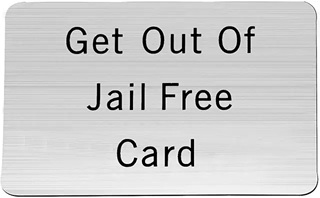
The "Get Out Of Jail Free Card" is a from the board game Monopoly for a card that lets you escape jail, but it's also an idiom for anything that saves you from trouble.
When buying a property, there are several contingencies where in theory you could walk away from the transaction with your Earnest Money in hand! Four of the most common contingencies or “Get Out Of Jail Free Cards” include Financing, Appraisal (on Resale homes,) HOA Requirements & Inspection
Mitch emphasizes the phrase “in theory” because when a transaction terminates, a mutual release is typically required. That release specifies how the earnest money will be handled—whether it is returned to the buyer, retained by the seller, or divided between the parties. Since agents cannot force clients to sign a mutual release, disagreements over what are actual defects and how the earnest money should be distributed may result in litigation, making outcomes difficult to predict.
It is worth noting that Indiana courts often tend to favor buyers in Earnest Money disputes. Buyers usually incur inspection and appraisal costs, while sellers can often resell the property. As a result, courts may find it difficult for sellers to demonstrate financial harm caused by a failed transaction. Still, it's impossible to predict with certainty, how a court will rule!
You Will Need To Let Mitch Know Right Away How You Want To Pay The Earnest Money. The Three Most Common Ways Are Listed Below. You May Also Be Able To Do A Wire Transfer.
Today Most Brokerages Accept Earnest Money Payments Electronically Using An App Or Online
Electronic/Digital: This is usually the easiest way to deliver the earnest money to the Escrow Holder which typically is the Listing Agent's Brokerage. These electronic payment methods typically connect directly to you bank account just like you are logging in to you account to pay bills or check the balance of an account. These Services typically have a one time charge of $20-$30. When Mitch is the escrow holder Mitch Uses the Earnnest App which changes $24.00 and the Earnest Money can be paid using www.PayEMhere.com
Every Brokerage Will Accept A Personal Check To Pay The Earnest Money
Personal Check: The check is payable to the Escrow Holder which is typically the Listing Brokerage. On the memo/note line of the check you should write Earnest Money followed by the Property's Address. The Earnest Money check needs to be delivered to the Escrow Holder. You can drop that off or you can meetup with Mitch and he will deliver the check for you. If you decide to drop off the check then most times there is a locked/secure mailbox that can be accessed 24/7 from outside the office of the Escrow Holder. Please text Mitch a copy of the Earnest Money check before you drop it off.
In addition to texting Mitch a copy of the check before you drop it off, you will want to take a picture or quick video of you either putting the check in to the locked box or giving the check to someone at the brokerage office.
Note: If you need to transfer funds between accounts, then you should do that online ASAP since the check could be deposited remotely as early as the same or next business day.
If You Have Enough Time Before The Earnest Money Delivery Deadline, To Visit The Bank, Every Brokerage Will Also Accept A Bank Issued Check To Pay The Earnest Money,
Bank Issued Check (Certified or Cashier's): If you don't have paper checks, and you don't want to use the electronic app to pay the Earnest Money then you can also use either a Cashier's or certified Check, The check is payable to the Escrow Holder which again is typically the Listing Brokerage. On the memo/note line of the check you should write Earnest Money followed by the Property's Address. Like Paper Personal Checks, These Bank Issued Earnest Money check need to be delivered to the Escrow Holder. Most times there is a locked/secure mailbox that can be accessed 24/7 from outside the office of the Escrow Holder
Although The Least Common Way To Pay Earnest Money, Some Brokerages May Allow For A Wire Transfer
Wire Transfer: If you would like to pay the Earnest Money using a Wire Transfer, then let Mitch Know and he can find out if the Escrow Holder can receive wires. Beyond any fees charged by your bank to send the wire, some brokerages may also charge you an inbound wire fee that could range from $20-$50. Note: The other downside to sending a wire might be your bank's business hours if you cannot initiate the wire online. Lastly, some financial institutions, especially non brick and mortar operations and/or investment brokerages, can take 2-3 days to initiate and process the wire transfer which could mean the Wire is not received in a timely way.
This Can Typically Be Paid Electronically, With A Personal Or Bank Check
You will Find The Amount Of The Earnest Money, Who The Escrow Holder Is, And The Timeline For Delivery On Lines 39 to 42 Of The Purchase Agreement. NOTE: Be sure To confirm the Earnest Money Terms were not changed as part of any counter offer(s).
After You Accept A Purchase Agreement On The Contingent Property, You Must Notify The Sellers Of The New Property Using The REMOVAL OF CONTINGENCY AMENDMENT.
As the Buyer, you agree to remove this contingency when a Purchase Agreement is accepted on your Contingent Property, which is typically your current home. When the contingency is removed, due to your acceptance of a Purchase Agreement on the Contingent Property, the Purchase Agreement on the New Property is then contingent upon the closing of the Contingent Property. However, the timeline to close on the New Home, unless changed by an amendment to the PA, is as indicated in the accepted Purchase Agreement.
So, if the potential offer on the Contingent Property will not close within the timeline specified in the Purchase Agreement on the New Property, than before you can accept the offer on your Contingent Property, you must FIRST have the Seller's of the New Property, agree to modify the timeline for closing on the New Home to support the closing on your Contingent Property. Only after those changes happen can you accept the Purchase Agreement on the Contingent Property. Then once accepted, you can need to also notify the Seller's on the New Home that you have accepted an offer on your Contingent Property.
If you remove the contingency on the New Property, after accepting a Purchase Agreement on the Contingent Property, then the transaction concerning the New Property will proceed according to the terms and timelines of the Purchase Agreement on the New Home. This includes the time to close the Purchase Agreement of the New Home. With the exception of delivery of the Earnest Money, all remaining time conditions in the Purchase Agreement on the New Property, shall begin to run upon removal of the contingency. Should the transaction on the Contingent Property not close, then the Purchase Agreement on the New Property is null and void and the earnest money shall be disbursed according to a Mutual Release Agreement
This Is A Less Common Contingency
A Home Sale or “First Right” Contingency, That Seller's May Be Willing To Accept In Balanced Or Buyer’s Markets, Will Be Indicated On Lines 100 to 108 Of The Purchase Agreement And In The Corresponding Addendum to Purchase Agreement. You Can Learn More About First-Right Contingencies Here.
You'll Have 5-7 Days To Submit Your Mortgage App Or 1-2 Days To Provide POF
While the Purchase Agreement indicates the maximum number of days to make your mortgage application, Mitch encourages you to start the process ASAP.
Mitch will share a copy of the Purchase Agreement and the related docs with Mack Howell, Mitch's preferred lender or the lender that provided you the pre-approval. So, the lender will expect to hear from you typically within 1-2 Business days. Mitch encourages you to talk with Mack or your lender about locking in an interest rate sooner vs later.
The Federal Reserve's FOMC has eight scheduled meetings for 2026 to set monetary policy and to discuss economic conditions that could influence interest rates. The tentative FOMC meeting dates are January 27–28, March 17–18, April 28–29, June 16–17, July 28–29, September 15–16, October 27–28 and December 8–9. If you find yourself going under contract within 7-14 days of the next Federal Reserve meeting, then Mitch also encourages you to ask your lender about their thoughts regarding locking in ASAP, vs waiting till after the next Federal Reserve meeting, if it seems likely there could be another rate cut.
You may also want to talk with the lender about any potential to take advantage of locking in a rate ASAP, and also discussing the potential conditions, timelines and criteria that might allow you to possibly drop one time to to a lower interest rate. Of course, in the end it’s 100% your decision to lock in a rate knowing that once the rate is locked in, the rate cannot increase, or instead wait, and hope that the rates will decrease between now and the closing, realizing the rates could also increase costing you even more! NOTE: If you decide to wait to lock in an interest rate, then please talk with Mack or your lender about the latest date to lock in an interest rate so that you will have your clear to close by the date required in the Purchase Agreement.
As A Cash Buyer, If You Did Not Provide Proof Of Funds With Your Offer, Then You Also Have A Set Number Of Days To Provide Proof Of Funds After You Are Under Contract
While the Purchase Agreement indicates the maximum number of days to make your mortgage application, Mitch encourages you to reach out to your lender ASAP to start the process. To help with that, Mitch will share a copy of the Purchase Agreement and the related docs with Lender who provided your pre-approval. So, your lender will typically expect to hear from you within 1-2 Business days. Mitch encourages you to talk with your lender about locking in an interest rate sooner vs later.
You Typically Have 5-7 Days To Submit Your Mortgage Application
Line 79 Of The Purchase Agreement Shows You The Number Of Days, After Acceptance Of The Agreement, To Make Written Application For Financing. Or, If You Are A Cash Buyer, Then On Line 62 Of The Purchase Agreement Can See The Number Of Days After Acceptance Of The Agreement, To provide Proof Of Funds To The Sellers.
You Have A Set Number Of Days To Confirm You Can Obtain Insurance After You Are Under Contract
We need to notify the Seller(s) about any issues you encounter related to the insurability of the property. You should start working on this item tomorrow or within the next two business days at the latest! Mitch suggests that you contact the insurance company that insures your cars, and your current place for your first quote. For a second quote Mitch would encourage you to contact Kevin Surface who is his preferred Insurance agent! Mitch has worked personally with Kevin for literally over 25 years, and he has also helped many of Mitch's clients.
Note: When you speak with any insurance agents, you want to also ask about any noteworthy insurance claims that they show on the property and let me know ASAP if anything shows up!!
You will want to pay for the insurance at closing! So, you will need to email Mack Howell, or your lender, the invoice for the insurance firm you decide to working with, so that the title company can pay for the first year’s insurance as part of closing.
Identify Any Undisclosed "Defects" With The New Property
You Typically Have 10-14 Days To Identify Any Defects With The New Property
Lines 213-252 Of The Purchase Agreement Explain The Inspection Process. Specifically Line 215 Confirms The Number Of Days, After Acceptance Of The Agreement, To Perform Inspections And Request Repairs. Additionally, Line 225 Indicates The Number Of Additional Days You Can Take, If Needed, For Any Follow-up Inspections And / Or Requests.
The Goals And Objectives
Buying a home is exciting, but the inspection phase can also feel overwhelming—especially when unexpected issues surface. The goal of the inspection process is not to determine whether a home is perfect, but to understand its condition, identify true defects, and make informed, strategic decisions moving forward. Mitch’s approach is designed to reduce surprises, keep emotions in check, and help buyers navigate inspections with clarity, confidence, and realistic expectations.
Inspection Response Deadline & Extensions
Buyers typically have 10–14 days to identify and address inspection-related defects. Mitch’s Next Steps email will confirm the specific timeline outlined in your Purchase Agreement.
If the inspection reveals issues that require further evaluation, the inspection response period can usually be extended by 3–5 days to allow time for additional inspections or contractor assessments.
Note: The inspection company will also need to confirm the payment method along with what services you want completed. (See 5f below) You can see the contact info Security Home Inspection here. Security will likely try to call you starting the 2nd business day after you are under contract. If you want to ensure the conversation happens at a day and time that works best for your schedule, then please feel free to contact them directly first, by calling at some point before they start calling you.
If you have any difficulty, or have specific questions about the inspection process, ideally after you have reviewed everything her first the please ask to speak with Patty Thornberry. Patty and her husband Phil own the firm and Patty is an excellent resource!
Disclaimer:
This content is intended to provide general information for Mitch's clients about how defects are commonly evaluated in Indiana real estate transactions. It is not legal advice. Every transaction is unique, and outcomes can vary based on the facts of the situation and the terms of the purchase agreement. In addition to Mitch's guidance, Buyers and sellers are encouraged to seek legal advice for questions specific to their transaction..
The Three Elements Of A Defect
The Purchase agreement includes the legal definition of a “Defect" Per Indiana Code § 32-21-5-4.We sometimes also refer to these as Material Defects. There is no such thing in Indiana Law as a "Major Defect."
1. Significant Adverse Effect on Property Value
This element is often the least clear-cut, as the law does not define what dollar amount—relative to the sales price—constitutes a “significant” impact on value. Mitch generally considers an issue costing 1% or more of the sales price to correct as potentially meeting this element when evaluated purely on cost. However, other agents, buyers, and sellers may view this threshold differently.
Additionally, cost alone is not always determinative. Damage to a key architectural or structural component of the property may significantly affect the property’s value even if the repair cost is less than 1% of the sales price.
2. Significant Impairment to Health or Safety
Mitch believes the most straightforward way to identify issues that significantly impair health or safety is when they do not meet applicable building code. Building codes exist to protect public health, safety, and welfare by establishing minimum standards for design and construction.
Generally, a property is only required to meet the building code that was in effect at the time it was constructed—not current code standards that may have changed over time. An important exception applies when parts of the property have been substantially updated, such as a kitchen or bathroom remodel. In those cases, the updated areas must comply with the building code that was in effect at the time of the update.
3. Significant Reduction of the Property’s Expected Useful Life
Courts have found that this element requires careful distinction between substantial repairs and routine maintenance.
For example, a leaking roof—if left unrepaired—can lead to rot, mold, structural instability, and potential safety hazards. This type of issue is more likely to be considered a defect. Conversely, a leaking faucet can also cause rot or mold if ignored, but courts generally view this as routine maintenance rather than a material defect.
The key difference between these examples often circles back to the first element—the cost of repair relative to the overall value of the property. A leaking faucet may cost a few hundred dollars to repair, while a roof repair or replacement can cost several thousand dollars.
Note: Mitch typically considers any active water leak to be a defect.
Not All Issues Are as Straightforward
Some conditions fall into gray areas and require deeper analysis. A common example is a window with a broken thermal seal.
Thermal windows are energy-efficient windows that contain an insulating gas between two panes of glass to reduce heating and cooling costs. Over time, normal expansion and contraction can cause the gas to escape, allowing regular air to replace it. This failure is typically identified by condensation forming between the panes of glass.
In winter, when it is warmer inside than outside, condensation appears on the pane closest to the exterior. In summer, when the interior is cooler, condensation forms on the pane closest to the interior. While the loss of insulating gas may only increase annual heating and cooling costs by approximately $0.30 to $1.00 per window, the more significant issue occurs when moisture evaporates and leaves a permanent cloudy residue between the panes—an unattractive cosmetic condition that cannot be removed.
Replacing the glass in a single window typically costs $100–$200, and because the primary impact is cosmetic, one broken thermal seal is usually not considered a defect. However, if a home has 30 windows and all have failed thermal seals, the combined replacement cost of $3,000–$6,000 on a $300,000–$400,000 home could meet the first element of a defect due to the cumulative impact on value.
Issues Typically Not Considered Defects
Unless you are purchasing brand-new construction, it is neither reasonable nor realistic to expect a property to be perfect. Issues that are purely cosmetic generally do not meet the legal definition of a defect. Common examples include:
-
Unattractive or dated paint colors
-
Scratched hardwood floors
-
Stained or worn carpet
-
Cracked or outdated ceramic tile
-
Cracked concrete on patios, sidewalks, driveways, or basement floors
Another frequently misunderstood category involves items that are near, at, or beyond their typical useful life. Age alone does not make an item a defect if it is still functioning as intended. Examples include:
-
Water heaters
-
Furnaces
-
Air conditioners
If these systems are operational and performing properly, age alone does not constitute a defect. Conversely, even a brand-new mechanical system that is not functioning correctly is considered a defect, regardless of age.
Can a Buyer Walk Away and Recover Earnest Money if a Defect Is Found?
In short: No, not automatically.
The purchase agreement requires that if a defect is identified, the buyer must provide the seller with the relevant portions of the inspection report and give the seller an opportunity to remedy the defect.
If a property component is damaged, deteriorated, nonfunctional, or improper—and it meets one or more of the three legal elements of a defect—and the issue was not previously disclosed, the buyer may only elect to terminate the agreement if the seller is unwilling or unable to remedy all defects prior to closing. In this scenario, then the Buyer "In theory" would be entitled to recover their Earnest Money.
Mitch emphasizes the phrase “in theory” because when a transaction terminates, a mutual release is typically required. That release specifies how the earnest money will be handled—whether it is returned to the buyer, retained by the seller, or divided between the parties. Since agents cannot force clients to sign a mutual release, disagreements over what are actual defects and how the earnest money should be distributed may result in litigation, making outcomes difficult to predict.
It is worth noting that Indiana courts often tend to favor buyers in earnest money disputes. Buyers usually incur inspection and appraisal costs, while sellers can often resell the property. As a result, courts may find it difficult for sellers to demonstrate financial harm caused by a failed transaction. Still, it's impossible to predict with certainty, how a court will rule!
Can Buyers Dictate How Repairs Are To Happen or Demand Money Instead?
Buyers cannot dictate which contractors the seller must use to complete repairs prior to closing. Likewise, buyers generally cannot specify how repairs are performed beyond requiring that they be completed in accordance with applicable building code. This may include the use of licensed contractors (such as licensed electricians or plumbers) when required by code.
If repairs are to be completed after closing, buyers may have more influence over contractor selection. Prior to closing, buyers retain the right to reinspect completed repairs, which is why sellers control the repair process.
Finally, while sellers may offer money in lieu of repairs, buyers cannot demand it. If a mortgage loan is involved, funds in lieu of repairs must typically be handled as:
-
Checks issued from the seller’s proceeds at closing, made payable to the repair vendors and held by the buyer until work is completed, or
-
Buyer closing cost credits or other lender-allowable fees
For cash purchases, buyers may receive funds at closing, but more commonly the purchase price is simply reduced by the agreed-upon repair amount
Scheduling the Inspection
In anticipation of going under contract, Mitch typically reserves an inspection slot for your new home with his preferred inspection firm, Security Home Inspection, and his preferred inspector, Braden Roadruck. While some agents avoid working with Security because their thoroughness can complicate transactions, those same agents often choose Security when purchasing homes for themselves or their families.
Braden is one of the firm’s most senior inspectors and is responsible for training new inspectors. Inspections generally begin at 8:00 AM or 12:00 PM and typically take 3–6 hours, depending on the size of the home. For larger homes and/or due to Braden’s training role, a second inspector may also be present.
Mitch strongly encourages buyers to attend the entire inspection whenever possible. If you cannot attend the full inspection, Mitch recommends arriving during the last 60–90 minutes, which allows the inspector to review any findings discovered earlier and bring you fully up to speed.
Mitch usually arrives during the final 30–60 minutes of the inspection to review any major concerns directly with Braden. This allows issues to be shown and explained in person, providing additional clarity.
If, even before submitting an offer, potential issues are noticed, identified, or suspected—such as broken thermal seals or wood rot—Mitch may proactively schedule contractor evaluations, ideally for the next business day following the inspection. Because contractor availability can be limited, it is often better to schedule and cancel if unnecessary rather than risk missing the inspection window.
Special Concerns & Communication with the Inspector
If you have specific concerns or items you would like the inspector to focus on, you should request to speak directly with Braden when confirming services and arranging payment. Please also notify Mitch so he can ensure that communication takes place.
Following the inspection, both you and Mitch will receive the written inspection report—typically by the next morning. You may also request a follow-up call with Braden to ask questions or clarify any findings.
Understanding Inspection Findings & the Buyer’s Inspection Response
Braden’s role is to identify and document the condition of the property; he does not determine which items qualify as defects for negotiation. Mitch automatically receives a copy of the inspection report and will advise you on which items are reasonable to request that the seller address.
This guidance takes into account any limitations in your Purchase Agreement, such as:
-
Minimum repair thresholds (commonly $1,000–$1,500), and/or
-
An agreed-upon repair deductible (often around 1% of the purchase price)
Mitch advises buyers to limit their Inspection Response to true defects only. Even then, it may make sense for buyers to handle minor, inexpensive repairs after closing.
For this reason, Mitch typically shares only the relevant portions of the inspection report with the seller rather than the full report. Even the selected pages often include items the buyer is not asking the seller to address. Since inspection reports commonly run 30–40 pages, providing only the relevant 20 pages can leave the seller aware that additional items were found but not requested—helping maintain leverage and goodwill.
For example, a common inspection finding is a missing handrail on basement stairs. By making selective, reasonable requests, sellers may be more inclined to say “Yes” to the Buyer’s Inspection Response rather than becoming accustomed to saying “No.”
Mitch often uses a poker analogy: in the final hand of a game, an overly aggressive bet can cause other players—even those with strong hands—to fold rather than stay in the game. A more measured bet keeps more players engaged. Similarly, reasonable inspection requests increase the likelihood of a cooperative seller response.
Follow-Up Contractors & Additional Inspections
After the inspection report is received, Mitch will review it with you to determine whether any follow-up inspections or contractors are recommended. For example, if Braden notes that a furnace is excessively dirty or shows rust that could indicate a larger issue, he may recommend an HVAC contractor to clean and further inspect the system.
If you already anticipate wanting an HVAC cleaning or inspection—regardless of what the inspection reveals—please notify Mitch as early as possible. This allows the work to be scheduled the same day or the following day and avoids overlap with Braden’s inspection.
Mitch coordinates all property access with the listing agent, so it is important that he knows which contractors you want scheduled, when they are needed, and for what purpose.
-
- Heating and Central Air Conditioning
- Interior Plumbing and Electrical
- The Roof, Attic, and Visible Insulation
- Walls, Ceilings, Floors, Windows, and Doors
- The Foundation, Basement, and Structural Components
If you want to discuss having, or not having, any of these tests completed before deciding what tests to schedule, then just let Mitch know when you want to talk about it, and he will make that call happen.
Additionally, Mitch would suggest if you want to ask more detailed questions about how some of these tests work, or will be undertaken, then he can’t strongly enough suggest that you talk with Patty at Security Home Inspection. While it’s possible she might just routinely answer the phone, her and her husband own the firm and she’s likely the most knowledgeable person there besides her husband!
You Have A Set Number Of Days To Review & Then Accept or Reject Any HOA Covenants, Conditions, Restrictions & Fees
We will need to notify the Seller about any issues related to the HOA documents typically within 7 to 12 days; from the date they provide us the documents. Note: Many times these documents are attached to the listing and Mitch acknowledges receipt in the further conditions part of the PA. This means your review period begins once the Purchase Agreement has been accepted.
If the HOA docs were not available for download with the listing, then Mitch will share with you any HOA docs he can track down so that you can start to review things sooner vs later. Once we receive the official set of docs from the listing agent, Mitch will let you know, send over the Seller's set of the documents which could be more complete, and Mitch will let you know when the review period ends.
If you change your mind for any reason, such that you do NOT want to proceed with the purchase based on the HOA documents, then we will have to notify the Seller before the end of that review period and ask for your earnest money back.
This is the easiest way to escape a purchase agreement with your Earnest Money in hand, which is why it’s typically the shortest contingency period in the agreement. Since there is a lot to read in these documents, and your schedules can be busy, please start reviewing, or reviewing again, all of those documents ASAP!
Once you have reviewed the HOA docs, if you decide you want to walk away, then please call me to discuss vs sending any emails or texts
You Typically Have 7-12 Days To Accept Or Reject Any Mandatory HOA
Lines 335-356 Of The Purchase Agreement Discusses When The Property Within A Community/Development That Has A Mandatory Homeowner Association. Line 337 indicates The Number of Days After Contract Acceptance, That The Sellers Have To Provide You These Documents. Line 346 indicates The Number of Days After The Sellers Provide The Documents, That You Have To Review & Accept Or Reject The HOA. (Note: Often These Docs Are Online With The Listing. This Means Your Review Period Starts With Acceptance Of The PA.)
Appraisals As Part Of The Mortgage Process
If you are buying the property with a Mortgage Loan, and the appraisal reflects a value less than the sales price, then this would typically be a “Get out of Jail Free Card!” That means you could walk away from the sale and get your earnest money back! Note: On most new construction, if the home does not appraise then this NOT a Get Out Of Jail free Card, and instead you are obligated to cover an gap between the Purchase Price and the Appraisal with additional down payment!
Appraisals When You Are A Cash Buyer
If you are buying the property with cash, and and as part of METHOD OF PAYMENT, Part 1 Cash, you also indicated there will be an appraisal, and the appraisal reflects a value less than the sales price, then this would be a “Get out of Jail Free Card,” that means you could walk away from the sale and get your earnest money back!
Appraisals When You Have Also Included Appraisal Gap Coverage To Make Your Offer More Attractive
If your offer included appraisal Gap Coverage then this means the Appraisal Amount Must Only be equal to, or greater than, the Sales Price LESS the amount of any appraisal gap coverage. For example if the Purchase Price is $500,000 and you included $20,000 Appraisal Gap Coverage this means as long as the appraisal amount is $480,000 or higher then the Appraisal Contingency has been satisfied and you must proceed to close. If however, in this example, the property only appraises for $470,000, then since the appraisal amount of $470,000 was lower than than the Sales Price of $500,000 less the $20,000 Appraisal Gap Coverage, the the Appraisal contingency has not been met and then this would be a “Get out of Jail Free Card,” that means you could walk away from the sale and get your earnest money back!
If the property does not appraise for the Sales price, reduced by any appraisal gap coverage, then you could also try to negotiate with the seller for a lower price that’s either equal to the appraisal or somewhere between the appraisal and the agreed upon purchase price. Just understand that in the same way you as the Buyer can walk away if a property does not appraise, then the seller can also walk away! The Seller is NOT obligated to sell you the property for the amount of the appraisal. Nor is there is any guarantee that both you and the seller, will agree on a new sales price that’s been triggered by an appraisal that came in lower than the purchase price.
Note: If the seller is able to obtain a backup buyer, for a higher sales price, especially if the backup buyer is a cash buyer that elected to not have an appraisal, then it’s not likely the seller would agree to lower the sales price any amount, let alone the appraisal amount!
Because of this, getting this appraisal back ASAP is to your advantage and this is another reason to start the loan application process ASAP so that the lender can order the appraisal ASAP!
An Appraisal Will Typically Be Part Of A Mortgage Loan & May Be Part Of A Cash Purchase
An Appraisal Is A Professional, Independent Opinion Of A Property's Fair Market Value, Created By A Licensed Appraiser, Primarily Used By Lenders To Ensure They Don't Loan More Than The Property Is Worth. Cash Buyers May Also Have An Appraisal Done To Ensure That They Don't Pay More Then The Property Is Worth. If A Cash Buyer Made The Purchase Contingent On An Appraisal Then This Will be Indicated On Line 65 Of The Purchase Agreement.
A mortgage loan "clear to close" (CTC) is your lender's final, official approval, meaning you've met all conditions, and the loan is ready for the closing table to finalize the purchase of the property. It's the "green light" after your lender has verified all documents, credit, and finances, allowing you to schedule the closing and prepare for signing.
What it signifies:
- Final Approval: It's typically the last step before you get the keys, confirming all requirements are met.
- Lender's Green Light: The lender authorizes the loan to be funded.
- Documents Verified: All your financial and property-related documents have been thoroughly reviewed.
What happens next:
- Closing Disclosure (CD): You'll receive the final loan terms and costs, typically 3 business days before closing.
- Scheduling Closing: If the closing date, time, and location, have already been tentatively scheduled with the title firm and the Seller(s) side then Mitch will just confirm those details with the all parties including the title firm. If closing has not already been tentatively scheduled, then Mitch will confirm your availability, along with the seller's side against available open time slots with the title firm.
- Final Walkthrough: Mitch will ask about your availability to do a last check of the property to ensure it's in good condition. This will typically happen the afternoon before closing or the day of closing right before the closing happens.
- Funds Wired: The lender sends the loan funds to the title company on the day of closing.
What to avoid before closing:
- Major Purchases: Don't take on new debt (like furniture, appliances, or vehicles).
- Job Changes: Avoid changing employers or income sources.
- Credit Activity: Don't apply for new credit or miss payments.
- Large Bank Deposits: Be prepared to explain any significant new deposits
You Typically Have 21-45 Days To Obtain Your Mortgage Loan Clear To Close
Line 83 Of The Purchase Agreement Indicates the Exact Number of days That You Have To Obtain Your Mortgage Loan Clear To Close Approval. If An Approval Is Not Obtained Within The Time Specified, The Purchase Agreement Will Terminate Unless All Parties Agree To An Extension Of Time For This Purpose Via An Amendment To The Purchase Agreement
The Next Steps Email - Closing Details & Utilities Etc.
As You Head Towards Closing This Email Will Layout All Of The Next Steps
By This Point There Are Few, If Any, Get Out Of Jail Free Cards Unless Any Inspection Repairs Have Yet To Be Finished And/Or Inspected Or You Have Yet To Obtain Your Clear To Close.
Once You Have Your Clear To Close, Then Typically The Only Reasons A closing Would Not Happen Is If Something Happens To The Property (Damage Of Some Sort That Can't Be Addressed Before Closing,) Or If Something Physically Happens To Either The Buyers Or Sellers. Beyond These Two Scenarios The Only Other Event That Would Typically Derail Closing Would Be If A Buyer Lost Their Job Before Closing.
You Will Receive The Closing Disclosure From Your Lender & You Will Need To Promptly Sign This Confirming Receipt
A Closing Disclosure (CD) is a 5-page document finalizing your mortgage terms, fees, and closing costs, which lenders must provide at least three business days before closing. It allows you to compare final terms with the initial Loan Estimate, specifically checking the cash-to-close amount. Review for errors in loan terms, interest rates, and fees.
Key Aspects of the Closing Disclosure
This document acts as a final review of the mortgage, ensuring transparency and confirming the exact amount of cash needed at closing.
When You Receive It: Lenders must provide the CD at least 3 business days before the scheduled closing.
The 3-Day Rule: Business days include all calendar days except Sundays and legal public holidays. Your signature is typically required to acknowledge receipt and start the waiting period. While federal regulations (TRID) do not legally require a signature, most lenders use it to prove compliance with the three-day rule
Key Details to Check:
Compare the final APR, loan terms, and total closing costs against the previous Loan Estimate. You can see a sample of the mandated form and see a detailed explanation page by page and line by line then you can do that here.
Common Mistakes/Errors:
Check for misspellings, incorrect loan amounts, inaccurate interest rates, or closing costs that have changed without justification.
If you have questions about something on the closing disclosure and/or if errors are found, you can discuss them with your lender.
While Mitch is happy to also review the Closing Disclosure with you, typically only your lender will be able to provide clarity on why something has changed and/or the best way to address your concerns. The 3-day window is designed to accommodate this review.
Note: The CD is not the "Clear to Close" itself, but a required disclosure issued often just before you receive your clear to close.
The Closing Statement From The Title Firm & The Amount You Will Need To Wire For Closing
We don’t typically know the exact amount needed for closing till we get the final closing statement from the title firm 2-3 business days before closing. Once Mitch receives and reviews the Closing Statement he will share a copy with you and will request 10-15 minutes to walk through the closing statement over the phone.
The title company will typically collect all of your info and pass that along to the HOA. They will also typically include, in the total dollars needed for closing, any HOA fees that will are due within 30-60 days after closing to make sure the HOA has those funds when needed in case it takes them time to switch out the seller’s information for yours.
Sending The Wire For Closing
Once Mitch receives the Closing Statement he will have the Title firm send you the wire instructions through a secure email. Note: Wire instructions Never Change! If you receive more than one set of wire instructions immediately contact Mitch and/or the Title Firm
The wire should be sent out no less than 24 "business day" hours before closing. So, if your closing is scheduled for Monday morning at 9:00 AM, then you should send the wire no later than the previous Friday morning around 9:00 AM. Note: if the previous business day before closing is a bank holiday, then you should send the wire on the first prior business day before the holiday again around the same time of day as the closing.
If your schedule in the three prior business days is exceptionally busy, or you will be out of town for any reason, then you may want to reach out to the lender and ask them to give you a rounded-up amount before we have the final closing statement. This will let you arrange for the wire before your schedule gets crazy and/or before you leave town.
If You Obtain A Rounded Up Amount To Wire From The Lender Then...
Let Mitch know that's the case and he will have the Title firm send you the wire instructions through a secure email. Note: Wire instructions Never Change! If you receive more than one set of wire instructions immediately contact Mitch and/or the Title Firm
Then at closing the title company will give you either a check (the default) or a wire transfer back to your bank for the excess funds. The wire with the return of any excess funds will typically be received by your bank by the end of the afternoon of closing or first thing the following morning if you have a late afternoon closing time. If you receive a check, vs a wire, it can take 7-10 days before your bank will release all funds for you to use.
If you’ll want to get a wire, vs a check from the title firm for any excess funds, then you will also need to bring your inbound routing number and the account number for where you want the funds sent.
Note: The routing number on a check is not always the “inbound” routing number especially if you bank with a credit union or an online bank. So, please confirm with your bank what their in-bound routing number is and then bring this info with you to the closing.
Wire Transfers From Credit Unions, Investment Brokerages, On-line Banks And/Or Banks Without A Brick & Mortar Greater Indy Branch
While most local bank branches can typically initiate and complete a wire transfer within 1 business day, it’s not atypical for on-line banks, credit unions, or investment brokerages may tell you wires can take 3-4 or more business days from the time you initiate the wire till the time the Title firm literally receives the actual funds.
Mitch had a buyer, where funds were coming from a well known "national bank" that did not have a brick and mortar branch anywhere in Indiana. This bank would not allow a wire of the necessary size, to be initiated either over the phone, or on-line! That meant the Buyer had to drive to Chicago to initiate the wire transfer for closing. Another of Mitch's buyers had funds, coming from a common On-line Bank, where the wire transfer literally took an unexpected 5 business days. This forced a delay in funding the closing. Sellers do not have to agree to such delays.
Absent funds for closing, by the closing date, the Sellers can walk away and keep your Earnest Money!
So, if any of the funds you will use as part of your down payment at closing, are coming from an investment brokerage, or an online bank, or a bank that DOES NOT have a “brick and mortar” location in the greater Indianapolis area, then you will want to speak with someone at your bank/investment firm to gain clarity on their wire transfer process.
Below, I have listed several questions you will want to obtain answers for, ideally in writing, from the financial institutions that currently have your funds that you will need for closing.
- Can I initiate a wire transfer online or do I need to visit in person? Note: an EFT is different from a wire transfer, and an EFT cannot be used to move funds for closing!
- Is there a limit on the amount that I can wire daily or via online before I must visit in person?
- From the time I initiate a wire transfer, how long will it take till I can be given a Federal Reference Number/SWIFT number? And, does this amount of time change with an online vs an in-person request?
- From the Time I initiate a wire transfer, how long does it typically take till the receiving party has the funds in their account via the wire? Again, does this amount of time change with an online vs an in-person request?
- Are wire transfers processed only at or before certain times during the day, and if yes what are those times/deadlines?
Mitch will want to meet you at the property to do the final walk through to make sure the house is as it should be (it hasn’t been struck by lightning, or there hasn’t been some other sort of damage to the house) before you close. This is typically done right before closing or it can be done the afternoon before closing if closing is happening early in the morning or your available right before closing will be limited. I encourage all Buyers to attend if you can. Typically, this final walk through will only take 10-20 minutes. If the walkthrough is happening immediately before closing, then we will go straight to the closing when we leave the property.
This email will include all of the details and contact information about where closing will be happening.
Mitch will include contact info for the utilities in this Next Steps Email.
All utilities should be in your name effective the day of closing, unless you will not get possession till a date after closing. In that case then you should schedule utilities to be in your name that date you will take possession of the property.
If you will be taking possession on a weekend or holiday then always be sure to have utilities put in your name effective the last business day before you take possession!
If you do not have the utilities turned on, and in your name, and the seller turns of utilities effective on the close or possession date, then you could encounter additional turn on fees, and you may not have utilities on after taking possession.
Please let Mitch know with an email or text once this step has been completed.
Attendance At Closing
NOTE: You'll Typically Meet Mitch At The Property For The Final Walk Through Right Before Closing
If you will not be able to attend closing for any reason then please let Mitch know ASAP. You have several options if one or more of the Buyers is unable to attend closing in person. Regardless of which scenario seems the most logical or convenient for you, all of these options require advance planning by the title firm, can require lender approval and involve an extra cost. So again, please let Mitch know ASAP so that the title firm can schedule and coordinate these options.
A) A Real Estate Power of Attorney (POA) is a legal document that lets you name an "agent" (attorney-in-fact) to handle the buying of the specific property, for you (the principal). It's typically prepared by the title firm for an extra $75 -$150 and is useful if you will be absent or incapacitated. It must be specific about powers (limited/general), properly signed, witnessed, and notarized to be valid, and typically also requires the lender's approval.
B) A Remote On Line Closing (RON) is a virtual closing that is very similar to a Zoom or Teams Meeting. The closing agent will have you hold up your state issued ID so that a copy can me made virtually and then the closing agent will walk you through all of the necessary forms signing each one virtually. This process of an on-line Notary in Indiana came about during and after Covid as an alternative to in-person closings. RON closings typically cost an extra $75-$150 and just require that parties signing have access to the internet and a laptop or desktop computer that includes both a microphone and a camera.
C) A Remote Closing is an in person closing where a local Notary, wherever you will physically be at the time of closing, meets you to take a photo copy your ID, walks you through the paperwork, and has you sign everything as needed. Remote in-person closings typically cost an extra $175-$250.
What Happens At Closing
The first thing that will happen at closing is the closer will ask everyone signing to provide their ID so that they can make copies of the IDs. The most typical form of ID is your driver’s license or a state issued id with a photo like a passport. while they prefer driver’s license, either will work.
Whatever identification you plan to bring must be valid, which means not expired. If you forget your ID or if the ID is expired, then closing will not happen! So please make sure to check the expiration date AND be sure you bring your valid ID with you for closing, after you check the expiration date!
Funds For Closing
Funds From A Single Source Of $10,000... Or More Must Be Wired To The Closing Agent's Escrow Account - As you may know, any time the funds for closing exceed $9,999.00, then all funds must be wired early enough before closing, so that the title company has the funds at closing. We won’t typically know the exact amount needed for closing till two to three business days before the actual closing.
If the you will happen to be out of town right before closing, or anticipate a crazy busy schedule with work or other needs, or you just want to deal with the wire transfer sooner than 2-3 business days before closing, then the Buyers you can have their lender provide you a rounded up estimate of funds needed for closing.
The bottom line is...
All funds needed for closing must be received before closing can be completed.
What Is A Dry Closing
While not typical or frequent, if the only element of closing to be completed is receipt of the funds for the closing then this is what we call a Dry Closing.
If this happens then you as the Buyer will not receive possession of the property till after the all funding is received. Likewise no disbursements to others will be made including the real estate agents, the seller or anyone else will occur till the full funding is received by the title firm.
One of the most common reasons for a Dry Closing is when the Buyer's funds for closing are coming from an Investment brokerage or from a online bank or a bank that does not have a greater Indy area brick and mortar location. You can read more about this in 10A below.
You Typically Have 30-40 Days To Close On The Purchase Of The Property
Line 95 Of The Purchase Agreement indicates the "Earliest Closing Date." Mitch uses the description "Earliest" For This Closing Date Because The Purchase Agreement Gives The Ability To Delay The Closing Date By A Number Of Days, Also On Line 95 Of Purchase Agreement, Related To An Event That's Also Indicated On Line 95. The Most Typical Event That Could Delay Closing is The Date You Obtain Your Clear To Close From The Lender. Another Event That Could Be Indicated Is Agreement On The Inspection Response Or In Theory Any Of The Other Contingencies In The Purchase Agreement.
NOTE: You'll Typically Meet At The Property For The Final Walk Through Right Before Closing
There Is A Lot Here... So Please Feel Free To Reach Out To Mitch With Any Questions
Ask Mitch About The Value Of A Properties In An Area You Are Considering!
If you're like most home buyers, you want to pay the least amount of money for a property. And, what a property is worth in terms of Market Value, and what it's worth to you as the buyer, could be two very different amounts!
While only the Buyer can decide what it's worth to them, real estate professionals doing an Appraisal or a Market Analysis are sharing their personal opinions on the Market Value at that point in time. Real estate Market Values though are not like a ten-dollar bill that is worth $10 regardless of if it’s crisp and brand new, or if it’s twenty years old, dirty and torn. Neither the condition of the bill in your hand as the buyer, the condition of other ten-dollar bills, nor the location of where you are holding that ten-dollar bill will change its value! If the Market Value of real estate was also this precise and exact, just like the value of a ten-dollar bill, then there would frankly be no need for real estate agents!
Accurately evaluating the value of a house, townhouse, or condominium is a complex calculation that leverages years of experience and expertise like Mitch has, as one of the Top REALTOR's in the Greater Indy area! So let's start at the very beginning - with the RIGHT price! And the best way to find the RIGHT price is to ask Mitch.
1/3 Is About The Property Itself: The Location, Condition, Updates, Bed & Bath Count, Size, Age & All Features
1/3 Is About Similar Places For Sale A Buyer Could Also Buy, At The Same Time, In The Same & Similar Areas
1/3 Is About What Similar Properties, In The Same Or Similar Areas, Have Sold for In The Last 6-12 Months
Learn About 4 Common Ways To Determine The Value Of A Property - The Most Accurate (4 stars) To Least Accurate (1 star)


Instant Online Value Estimators

The Iron Triangle Of Service: Good, Fast, And Cheap -- PICK TWO. You Can Never Have All Three, As The Saying Goes!
Online Value Estimators are Fast and Free... And Free is the ultimate definition of cheap! So, since you can NOT have all three, and these online instant valuations are Fast and Free, then that means these Estimators can NOT also be Good!
There are many real estate and lending websites offering estimators out there. You can use this if you want a general estimate of your home may be worth. While these can help you decide if it’s worth considering selling or refinancing, these sites tend to dramatically undervalue or overvalue property values. So, using these when selling or purchasing a new place could create unrealistically high or unreasonably low expectations that could cost you thousands of dollars as both a seller or a buyer!

About Mitch
Mitch leverages his local expertise, combined with his meaningful business and life experiences, and decades of professional leadership and growth in the construction and technology industries to contribute to his success as one of Greater Indy's Top REALTORs.
Mitch is committed to helping change the lives of his clients as they start their next chapter, by making it easier, more enjoyable and more profitable for his clients that design, build, buy, and sell their home, condo, townhouse or investment property!
Get Up To Speed On Your Local Real Estate Market, On The Main Area & Community Pages, For The Greater Indianapolis Area

THE GREATER INDIANAPOLIS AREA
Click On The Map To Open In A New Window

SOUTH

USE THESE RESOURCES & TOOLS TO HELP YOU MAKE THE RIGHT MOVE IN THE GREATER INDY AREA
- How Is
The Market
Doing?
- Calculate
Mortgage
Payment
- Interest
Rates
Today
- See All
Open
Houses
- Say Goodbye
To The Endless
Searching
- Your
New Place
Critera
- The
Foundation
Mitch's Blog
- Easy
Advanced
Searching
- What's A
Property
Worth
- payEMhere.com
Earnest Money
& How To Pay
- Mitch's
Preferred
Venders
- Get Better
Interest
Rates
- Indiana
TESLA
OWNERS
- 400 Real
Estate Terms
You'll Hear